
Police Chief
VoyagerOne IEStrategy
4.81.30K Reviews
- Version
- 0.1.181
- Installs
- 5.00M
- Age Rating
- Teen
Screenshots
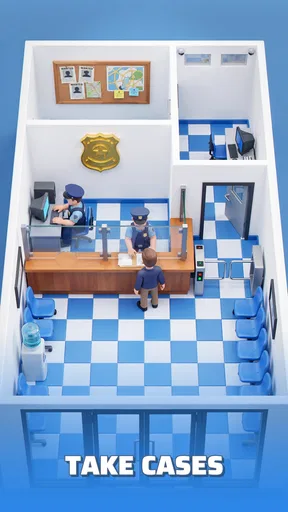
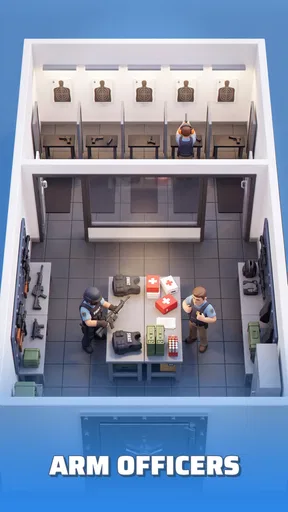
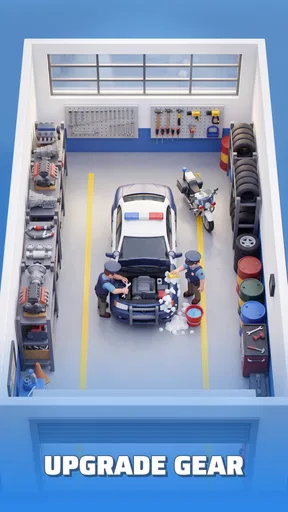
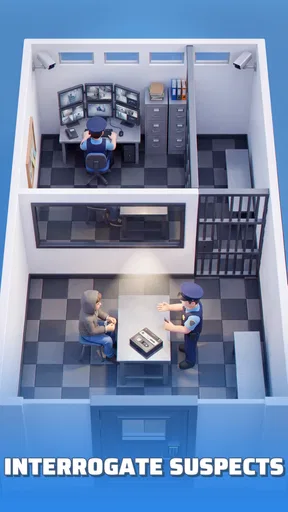
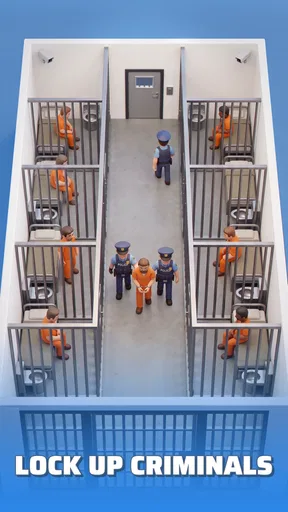
Our Review of Police Chief
 Analysis by Appyee
Running a police station sounds simple until every decision starts competing for attention. Police Chief turns that pressure into the central challenge of its strategy gameplay: I am not just sending officers from one screen to another, but trying to keep a growing operation useful, responsive, and financially sensible. That focus gives the game a clearer identity than many casual management titles, which often reduce their subject to a collection of upgrades.
My first impression was that the appeal comes from the role rather than from a complicated story. VoyagerOne IE places me in charge and asks me to think like the person responsible for the whole station. The store summary asks whether I can manage a police station and become a world-renowned police chief, but the more interesting question during play is whether I can make sensible choices before small problems become larger ones.
It is a free strategy game for Android, rated Teen, with a 4.7 average from around 83 thousand ratings and over a million installs. Those figures suggest that the management idea has found a substantial audience, but they do not remove the need to understand its rhythm. I found it most enjoyable when I treated each decision as part of a longer plan instead of tapping through every available action immediately.
Why the chief’s role is the real game
The most important capability here is the ability to manage the station as a connected operation. That sounds like a familiar idea, yet it changes how I read every choice. A new improvement is not automatically valuable just because it is available. I have to consider whether it supports the station’s immediate workload, whether it creates a bottleneck elsewhere, and whether I am spending resources on visible progress instead of useful progress.
This is where the game separates itself from a basic idle experience. In an idle game, the best action is often the one that increases a number fastest. In Police Chief, the fantasy works better when I pause and ask what kind of chief I want to be in the next few minutes: the player who expands quickly, the player who keeps the operation stable, or the player who saves resources for a more important improvement.
That choice gives the game a practical layer that is easy to miss from its short store description. The station is not merely a backdrop for collecting rewards. It is the reason I care about timing. A decision that looks efficient in isolation may be less helpful if it leaves the rest of the operation under pressure. The strongest moments come from noticing those connections before committing.
I also like that the role creates a natural reason to return. I am not returning only to see a larger number; I am returning to check whether the station now supports a better plan. That distinction matters for people who enjoy management games but become bored when progression is completely automatic. Here, the chief perspective gives routine actions a little more meaning.
Turning short sessions into useful decisions
The game works particularly well in short visits. I can open it when I have a few minutes, review what is happening, make a decision, and leave without needing a long uninterrupted session. That makes it a comfortable fit for a commute, a break, or the quiet part of an evening. The important habit is to avoid treating every visit as a race to spend everything available.
My preferred routine is to begin by looking at the station’s current situation rather than immediately selecting the most attractive upgrade. I then decide whether the next action should improve short-term flow or prepare the station for later growth. This small pause is one of the most useful techniques I found because it prevents progress from becoming a string of disconnected taps.
There is also a psychological trade-off in the way the game presents management. Expansion feels satisfying, but stability is often less dramatic. A player who enjoys obvious visual progress may feel tempted to choose the largest-looking improvement every time. I had better results when I accepted that a quieter decision could be the stronger one if it kept the station from becoming uneven.
That approach is especially useful for younger players or anyone new to strategy games. The theme is approachable, but the underlying lesson is transferable: growth only helps when the systems supporting it can keep up. The Teen rating also makes the game a better fit for players who are comfortable with a more mature law-enforcement setting than a purely cartoonish management theme.
A realistic everyday play pattern
Imagine opening the game during a short lunch break. I would not try to redesign the whole station in that moment. I would first review what has accumulated, identify the one area most likely to slow the next cycle, and use the available resources there. If the station is already functioning smoothly, I would save rather than spend simply because an option is glowing on the screen.
Later, with more time, I could make a broader change and observe whether it improves the overall rhythm. This two-stage approach is more effective than making large decisions while distracted. It also makes the game feel less like a checklist and more like a small operational puzzle. The best session is not necessarily the one with the most taps; it is the one where each tap has a reason.
That is one of my non-obvious recommendations: use short sessions for diagnosis and longer sessions for restructuring. Mixing those purposes can lead to impulsive spending or upgrades that do not solve the real issue. The distinction is simple, but it helps the game’s management layer come through clearly.
Another useful habit is to keep a mental record of what changed after an improvement. If the station feels better, I know the choice supported the current plan. If progress still feels awkward, I should not assume that buying another unrelated improvement will fix it. Looking for the actual bottleneck is more reliable than reacting to whichever option is most visible.
Where the strategy feels strongest
The game’s strongest scenario is for a player who enjoys gradual responsibility. I can begin with a manageable operation, learn how the station’s decisions interact, and then make more ambitious choices as my confidence grows. The satisfaction comes from recognizing patterns: a station that once felt difficult becomes easier because I understand its priorities, not because I am simply tapping faster.
This also makes it suitable for people who like strategy but do not want a long campaign with complex controls. The police-station setting provides a clear theme, while the management format keeps the focus on decisions. Compared with a traditional real-time strategy game, it is less about commanding units across a battlefield and more about maintaining a functioning organization.
Compared with a city-building game, the scope feels more focused. A city builder usually asks me to balance many unrelated public systems, while this game benefits from concentrating attention on one police operation. That focus can be refreshing, especially when I want a strategy experience that is easier to understand at a glance.
It is also different from a pure simulation. I would not choose it if I wanted a detailed professional model of policing, staffing, or public administration. The attraction is the accessible management fantasy: I get the responsibility of being chief without needing specialist knowledge. Players seeking realism above all else may prefer a more demanding simulation, while players wanting a lighter strategic routine may find this balance more inviting.
The cost of convenience
The free entry point makes it easy to try, but the game includes optional purchases ranging from $0.99 to $99.99 per item. That matters because management games naturally create moments where spending can feel like a shortcut around waiting or a difficult decision. I recommend deciding on a personal limit before playing, particularly if the satisfaction of quick progress is important to you.
I found the experience more rewarding when I treated purchases as optional rather than part of the normal strategy. Saving resources and choosing carefully gives the management decisions more weight. If I remove every delay with a purchase, I may progress faster, but I also lose some of the tension that makes the chief role interesting.
This is not a criticism of the free model by itself; it is a reminder to match the game with your habits. Players who dislike any form of optional spending pressure should approach cautiously. Players who are comfortable ignoring purchases can focus on the planning layer and decide for themselves whether the free progression feels satisfying.
The other trade-off is repetition. A station-management game depends on repeated cycles, and that structure will not appeal to everyone. I enjoyed the routine when I had a specific goal, such as improving balance or preparing for growth. Without a goal, the same actions can feel more mechanical. The game is therefore better for people who enjoy incremental optimization than for players looking for constant surprises.
Device fit and practical expectations
The current version is 0.0.971, and the game supports Android 7.0 or later. That broad compatibility makes it accessible on many older Android devices, although the exact feel will still depend on the phone or tablet being used. I would keep expectations realistic on older hardware: a compatible operating system does not automatically guarantee the same smoothness as a newer device.
Because the game is built around management rather than rapid action, it is a good candidate for touch controls and brief play. I do not need the precision or constant reaction speed expected from a competitive action game. That makes it easier to play one-handed or in short bursts, though anyone who dislikes menus, repeated decisions, or incremental progress may still find the format slow.
The Teen content rating is worth considering before installing it for a younger player. The police theme may sound universally suitable, but the rating indicates that parents should make the decision based on their own expectations. For adults and older teens who enjoy strategy, the subject gives the management loop a stronger identity than a generic business simulator.
Who will get the most from it
I would recommend this game to someone who likes watching a system improve through deliberate choices. It is especially well suited to players who enjoy asking, “What is holding this operation back?” rather than simply asking, “What can I buy next?” That mindset turns the station into a small puzzle and makes the chief role feel earned.
It is also a good option for people who want a strategy game that can fit around daily life. A short session can be meaningful if I enter with a clear purpose, and a longer session gives me room to reorganize my approach. The game does not require me to commit an entire evening before I can enjoy a result.
I would skip it if I want a story-led police adventure, a tactical game with direct control over officers, or a realistic law-enforcement simulation. The management perspective is the point, so anyone hoping to chase suspects, investigate cases in detail, or experience a cinematic campaign is looking at the wrong type of game.
I would also skip it if I find incremental progression frustrating or if optional purchases make free-to-play games uncomfortable. Even a well-designed management loop can feel like work when the player does not enjoy waiting, saving, and comparing priorities. Knowing that before starting is more useful than expecting the theme alone to carry the experience.
My recommendation after managing the station
The best way to play is to manage for balance first and expansion second. That single rule captures what I found most valuable. The game becomes more engaging when I look beyond the next reward and consider whether the station can support the direction I am choosing.
VoyagerOne IE has built a focused strategy game around a role that is easy to understand but capable of creating meaningful trade-offs. Its free price makes trying it straightforward, while the Teen rating, optional purchases, and incremental structure give players a few practical questions to consider before committing. The strong average rating and broad install base show that the concept has connected with many players, but the real test is whether its management rhythm matches your taste.
For me, it works best as a thoughtful pick-up-and-play station manager. I can use a quick visit to inspect the situation, save resources when spending would be impulsive, and return later to make a larger change with a clearer plan. That workflow gives the game more depth than its short description suggests.
In the end, I recommend it to anyone who enjoys becoming better at a system through observation and small corrections. It is not the right choice for action-first players or anyone seeking a highly realistic police simulation, but as a focused strategy game about taking responsibility for a station, it offers a satisfying reason to keep checking in and thinking like a chief.
Privacy and Permissions
See what permissions an app requests and how it handles your data.
- Identity
- add or remove accounts
- Calendar
- read calendar events plus confidential information, add or modify calendar events and send email to guests without owners' knowledge
- Photos/Media/Files
- read the contents of your USB storage, modify or delete the contents of your USB storage
- Storage
- read the contents of your USB storage, modify or delete the contents of your USB storage
- Camera
- take pictures and videos
- Wi-Fi connection information
- view Wi-Fi connections
- Other
- view network connections, full network access, use accounts on the device, control vibration, prevent device from sleeping, Google Play license check
Verdict
Strengths of Police Chief
- Simple interface makes daily tasks easy to manage.
- Quick access to essential police management tools.
- Suitable for short play sessions on mobile devices.
- Progression system gives goals beyond individual missions.
- Runs well on many mid-range Android devices.
Limitations of Police Chief
- Some features may feel repetitive after extended play.
- Limited depth for players seeking a complex simulation.
- In-app purchases can speed up progression.
- Requires occasional internet access for certain functions.
- Visual presentation may seem basic compared with newer games.
Other Releases by VoyagerOne IE
View All


Similar Picks in This Category
View All
Clash of Clans
Supercell4.5

Plants vs. Zombies™
ELECTRONIC ARTS3.7

Lords Mobile: Kingdom Wars
IGG.COM4.5

Clash Royale
Supercell4.4

State.io — Conquer the World
CASUAL AZUR GAMES4.1

Car Driving School : Car Games
Spark Game Studios3.9
Frequently Asked Questions
What is Police Chief and what can I do in the game?
Police Chief is a management and strategy game in which you take responsibility for running a police department. You typically organize officers, respond to incidents, investigate cases, improve facilities, and make decisions that affect public safety. The main appeal is balancing limited resources, staff performance, and growing responsibilities while building a more effective law-enforcement operation over time.
Is Police Chief free to download and play?
Police Chief can generally be downloaded without an upfront purchase, but the exact monetization model may include optional in-app purchases, advertisements, or both. These extras can provide resources, speed up progress, or unlock convenience features. Before downloading, check the current store listing for pricing details, available purchases, and whether the game requires an internet connection for certain features.
Does Police Chief require an internet connection?
Some parts of Police Chief may work offline, especially basic management or previously loaded gameplay, but online access can be necessary for advertisements, cloud synchronization, events, updates, account features, or purchases. In my experience with management games, offline functionality can vary after updates, so players who want uninterrupted access should review the latest requirements listed on Google Play or the App Store.
Is Police Chief suitable for children and younger players?
Police Chief may be suitable for older children and general strategy-game fans, but parents should review its official age rating before installation. The game focuses on police work, emergencies, investigations, and crime-related situations, which may include mature themes even if the presentation is not graphic. Advertising, chat, external links, and optional purchases should also be checked through the device’s parental controls.
What devices are compatible with Police Chief?
Compatibility depends on the specific version of Police Chief and the operating system used by your device. Android and iOS requirements can change as the developer releases updates, so it is important to check the official store page before downloading. A stable internet connection, sufficient free storage, and a reasonably modern phone or tablet may be needed for smooth performance.
Play our best games!


